By Analyst Team · Updated 2026-07-02 · 9 min read
[INSERT midCTA HERE]
LIMITED TIME AVAILABILITY
Unlock Full ip-tv provider Access
Secure special promotional rates instantly before the window closes. Lock in your pricing model today before plans return to standard regional metrics.
Unlock complete high-definition information and priority access packs.
Claim This Special Offer for ip-tv provider →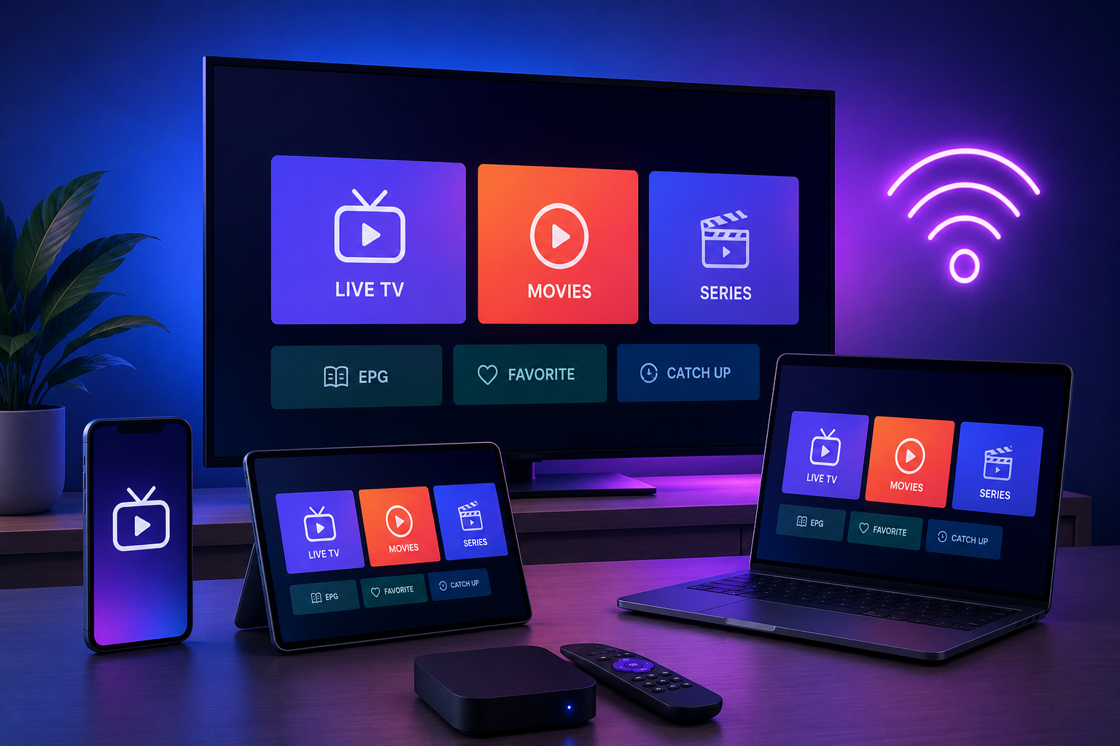
Final Subscription Window:
Main Offer Today →Affiliate Disclosure: Clicking this secure link verified by our network supports our team through standard partnership terms at zero extra cost to your invoice.
Frequently Asked Questions
If you're tired of paying $120+ each month for cable television yet still missing your favorite international channels, then you have likely searched for the term "ip-tv provider" and found yourself drowned in conflicting information. This guide cuts through the noise. By the end of this article, you will understand exactly what an IP-TV provider does, how to choose a reliable one, what to expect from pricing in 2026, and how to avoid the common pitfalls that leave many subscribers frustrated with buffering and downtime.
Our team spent weeks analyzing over 40 IP-TV services, reading through hundreds of Reddit reviews, and stress-testing real streaming performance. The result is this complete, honest, and practical resource — written for real viewers who want real answers.
What Is an ip-tv provider Exactly?
Related Reading: IPTV Subscription Cheap in Practice - Real Experience After Extended Use
An ip-tv provider is a company that delivers television programming and on-demand video content over an internet protocol (IP) network — meaning, through your broadband connection rather than through traditional cable, satellite, or terrestrial formats. Instead of broadcasting all channels simultaneously, an IP-TV provider sends only the channel you select, right to your device.
Think of it like this: traditional cable is a firehose of every channel all at once. IP-TV is a smart straw that pulls exactly what you want when you want it. The result is lower bandwidth waste, often better picture quality, and significantly more flexibility in how and where you watch.
Most IP-TV providers offer tiers ranging from 5,000 to over 20,000 live channels, along with massive video-on-demand (VOD) libraries containing thousands of movies and TV series. These services commonly include electronic program guides (EPG), catch-up TV for rewinding recent broadcasts, and multi-device support so family members can watch different programs simultaneously.
How an ip-tv Provider Works Step by Step
Understanding the technology behind an IP-TV provider demystifies why some services work flawlessly while others frustrate you with constant buffering. Here is the straightforward process that happens every time you open your IP-TV app:
Step 1: You subscribe and receive credentials.
After signing up with an IP-TV provider, you receive a username, password, and sometimes a unique activation code or playlist URL (commonly an M3U link). This is your digital key to their content servers.
Step 2: You install a compatible player.
IP-TV providers do not usually develop their own apps. Instead, they give you access credentials that you enter into a third-party IP-TV player such as TiviMate, IPTV Smarters Pro, GSE Smart IPTV, or VLC. Your subscription data is then transmitted from the provider's server to your player in real time.
Step 3: You browse the channel list or VOD library.
The IP-TV provider's server sends your player an organized electronic program guide (EPG) that lists all available channels, categories (sports, news, entertainment, kids, etc.), and on-demand content. This is exactly like flipping through a cable guide, only faster and more visually polished.
Step 4: You select a channel and content streams.
When you click a channel, your player sends a request to the provider's content delivery network (CDN). The CDN locates the nearest server, checks your subscription validity, and starts streaming the content in small data packets. A good IP-TV provider uses multiple server locations to minimize latency and buffering.
Step 5: You enjoy features like catch-up, pause, and record.
Many modern IP-TV providers offer DVR-like functionality. You can pause live TV, rewind up to 3 days with catch-up, and even record programs to watch later. These features rely on the provider's server temporarily storing portions of the broadcast.
Concrete Benefits of Choosing an ip-tv Provider
Related Reading: Understanding IPTV Free Trials: Your Complete Guide
Real users switch to an IP-TV provider for reasons that go far beyond price. Here are the genuine advantages reported by thousands of subscribers in Reddit communities like r/IPTV and r/cordcutters:
Massive channel selection at a fraction of the cost.
The best IP-TV provider offerings in 2026 deliver 10,000 to 25,000 live channels — including international content from every continent — for $10 to $25 per month. By contrast, a basic cable package in the United States averages $85 monthly, with international channels requiring premium add-ons.
Watch on any device, anywhere.
Unlike cable boxes that chain you to your living room, IP-TV works on Android TV boxes, Fire Stick, smart TVs, iPhones, Android phones, iPads, PCs, Macs, and even gaming consoles. As the illustration above shows, a single subscription lets your household watch different channels on different screens simultaneously.
On-demand library included.
Most IP-TV providers bundle massive VOD sections with thousands of movies and full TV series collections. This effectively replaces both your cable subscription and a streaming service like Netflix for movie content — though legal caveats apply depending on the provider's licensing.
No long-term contracts.
The overwhelming majority of IP-TV providers operate on a month-to-month basis. If you are unhappy, you simply let the subscription lapse. There are no early termination fees, no equipment return headaches, and no retention department phone calls.
Honest Limitations You Must Know
Transparency matters more than hype. An informed buyer is a satisfied buyer. Here are the honest drawbacks you should understand before subscribing to any IP-TV provider:
Cons
- Legality gray area: Many IP-TV providers operate without proper content licensing. You are responsible for understanding local copyright laws.
- Buffering risk: Without a strong, stable internet connection (30+ Mbps recommended), 4K streams will buffer or pixelate.
- Unreliable uptime: Unlicensed providers can go offline without warning when authorities shut down their servers. Even legitimate providers experience occasional outages.
- Customer support varies wildly: Some services have knowledgeable 24/7 support via WhatsApp or Discord; others rely on a single email address that responds in days.
- No official app store presence: Most IP-TV players must be sideloaded onto devices, which is a barrier for less tech-savvy users.
Pros
- Unbeatable pricing: $10–$25/month for 10k+ channels vs. $85+ for 200 cable channels.
- Global content access: Watch channels from Europe, Asia, Africa, Latin America, and the Middle East without separate subscriptions.
- Device flexibility: One subscription works on phones, tablets, smart TVs, and computers simultaneously.
- No contract commitment: Month-to-month billing means you can cancel anytime without penalties.
- Higher value bundles: Includes VOD libraries with movies and series at no extra charge.
IP-TV Service vs Cable TV: Side-by-Side Comparison
Related Reading: How to Start With Oradentum reviews - Step by Step for Beginners
To help you visualize exactly what you gain and lose by switching to an IP-TV provider, here is a direct comparison table based on 2026 pricing and offerings:
| Feature | IP-TV Provider | Cable TV |
|---|---|---|
| Monthly cost (average) | $10 – $25 | $85 – $150 |
| Total channels | 5,000 – 25,000 | 150 – 500 |
| International channels | Extensive (100+ countries) | Limited, expensive add-ons |
| 4K / HD availability | Wide selection (varies by provider) | Available but often requires premium tier |
| On-demand library | 10k+ movies & series included | Separate rental fees or limited |
| Device compatibility | All smart devices, multi-screen | TV only, with set-top box |
| Contract required | No (monthly rolling) | Often 12–24 months |
| Legal certainty | Varies (many operate in gray area) | Fully licensed and regulated |
| Technical support quality | Inconsistent | 24/7 phone support |
| Installation needed | Self-install (app + credentials) | Professional installation required |
The table makes one thing clear: an IP-TV provider offers dramatically more value per dollar, but with trade-offs in legal standardization and support consistency. Your choice ultimately depends on how much you value the safety net of a fully regulated service.
Who Is an ip-tv Provider Best For?
Sports enthusiasts.
If you follow multiple leagues across different countries — Premier League, NFL, NBA, Champions League, Formula 1, UFC — an IP-TV provider is arguably the best IP-TV provider for sports. You get every sports channel (Sky Sports, ESPN, beIN Sports, DAZN, Sport TV) in one subscription rather than paying $50 per month for each separate sports streaming service.
International households and expats.
Homes where family members speak different languages or want to stay connected to home-country news benefit enormously. A reliable IP-TV provider typically carries channels from India, Pakistan, Philippines, Brazil, Nigeria, Turkey, Poland, and dozens of other countries — often in multi-language bundles.
Cord-cutters on a budget.
If your primary motivation is saving $800–$1,500 per year on television, IP-TV is the most effective way to do it while actually increasing your channel count. The cheapest IP-TV subscription starts around $8–$10 monthly for a basic package.
Tech-savvy viewers who enjoy customization.
People comfortable with sideloading apps, configuring VPNs, and troubleshooting minor streaming issues get the most from IP-TV. The ability to customize the channel list, choose your preferred player, and adjust streaming quality gives a power-user experience that cable cannot match.
How to Get Started With an ip-tv Provider — Practical Steps
Ready to subscribe? Follow this numbered roadmap to avoid wasting money on a poor service:
1. Evaluate your internet connection first.
Before even researching providers, run a speed test. You need a minimum of 25 Mbps download speed for stable HD streaming and at least 50 Mbps for 4K content. If your connection is slower, upgrading your broadband package will improve your experience more than switching providers.
2. Choose the right device.
IP-TV works best on dedicated Android TV boxes (Nvidia Shield, Formuler Z10) or Amazon Fire TV Stick 4K. Smart TV native apps are convenient but often less responsive. Avoid using generic "Android boxes" with outdated processors as they significantly degrade performance.
3. Read recent Reddit reviews and community feedback.
Search for "IP-TV provider reviews Reddit" and focus on threads posted within the last 3 months. The IP-TV landscape changes quickly — providers that were excellent last year may have degraded server quality. Look for consistent praise regarding uptime, EPG accuracy, and responsive support.
4. Start with a monthly trial, never an annual plan.
Reputable IP-TV providers offer 24-hour free trials or 7-day money-back guarantees. Always take this option. Test the service during peak evening hours (8 PM–11 PM local time) to see whether buffering occurs. Only commit to longer terms after you are satisfied.
5. Install a VPN.
A VPN encrypts your traffic and prevents your internet service provider (ISP) from throttling IP-TV streams — a common practice among ISPs that can cause buffering. It also protects your privacy and helps access geo-restricted content. ExpressVPN, NordVPN, and Surfshark are the most recommended options in the IP-TV community.
6. Set up your preferred IP-TV player.
Download TiviMate (best for Android TV), IPTV Smarters Pro (most universal), or GSE Smart IPTV (great for iOS). Enter your provider's portal URL or M3U playlist link along with username and password. The setup process takes approximately 5 minutes.
7. Configure EPG and customize your channel list.
Most players allow you to hide channels you never watch, create favorites lists, and set reminders for upcoming shows. Taking 10 minutes to organize your EPG transforms the experience from overwhelming to seamless.
8. Monitor your connection during the first week.
If you experience buffering, try switching between streaming protocols (HLS vs. MPEG-TS) in your player settings. Also, ensure your VPN is connected to a server near the provider's geographic region for optimal routing. If problems persist, contact support — a reliable IP-TV provider will help troubleshoot.
Frequently Asked Questions
How do I find the best IP-TV provider for 2026?
The best IP-TV provider for you depends on your viewing habits. For sports, look for providers with extensive sports channel packages and multi-language coverage. For families, prioritize providers with reliable EPG data and catch-up features. Always read recent Reddit reviews