By Analyst Team · Updated 2026-07-19 · 14 min read
If you have searched for "ip-tv provider," you are likely tired of expensive cable bills and limited channel selections. You want a modern, flexible way to watch live television, sports, movies, and international content over the internet. This complete guide explains exactly what an ip-tv provider is, how the technology works, what benefits and limitations to expect, and how to select the best ip-tv provider 2026 has to offer. We cut through the marketing hype to give you straight facts, practical steps to get started, and honest answers to common questions.
LIMITED TIME AVAILABILITY
Unlock Full ip-tv provider Access
Secure special promotional rates instantly before the window closes. Lock in your pricing model today before plans return to standard regional metrics.
What Is an ip-tv provider Exactly?
An ip-tv provider is a service that delivers television programming and video content over an internet protocol (IP) network instead of through traditional terrestrial, satellite, or cable television formats. The term "ip-tv" stands for Internet Protocol Television. Unlike standard cable, which broadcasts all channels simultaneously through a coaxial cable, an IPTV provider sends only the channel you select, streaming it directly to your device as a digital data stream.
Key related entities include the IPTV middleware (the software layer that manages user accounts, channel lists, and electronic program guides), the content delivery network (CDN) that hosts and distributes video streams, and the client application (often called an IPTV player) installed on your smart TV, phone, or set-top box. A reliable ip-tv provider for sports will have robust CDN infrastructure to handle high-bitrate live events without interruption.
This technology is fundamentally different from streaming platforms like Netflix or YouTube because it focuses on live linear television channels—the same kind you find on cable—delivered in real time. Many modern ip-tv providers also include video-on-demand libraries, catch-up TV, and digital recording capabilities.
How an ip-tv Provider Works Step by Step
Understanding the process helps you recognize why some providers perform better than others. Here is the technical flow:
Step 1 – Content Acquisition: The ip-tv provider sources television channels from broadcasters, often through direct licensing agreements or by retransmitting free-to-air satellite signals. The quality and legality of this acquisition directly affect channel stability and future-proofing. Providers with proper licensing offer more consistent service.
Step 2 – Encoding and Transcoding: Raw video feeds are compressed into digital formats like H.264 or H.265 (HEVC) at various bitrates. A good provider encodes each channel in multiple resolutions—720p, 1080p, and 4K—so your device can switch to the optimal stream based on your internet speed. This is where the "no buffering" promise is won or lost.
Step 3 – Streaming on Demand: When you select a channel on your IPTV player, a request is sent to the provider's server. Using IGMP (Internet Group Management Protocol) for multicast streams or RTSP (Real-Time Streaming Protocol) for unicast, the server sends only the channel you requested directly to your device. This efficient delivery is why a reliable ip-tv provider no buffering charge is technically feasible with proper infrastructure.
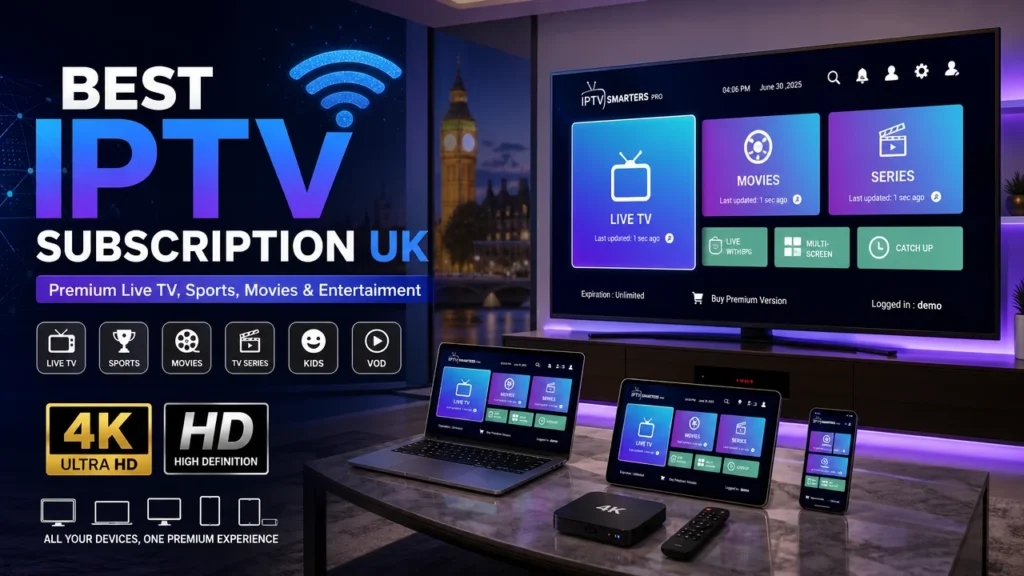
Step 4 – Device Playback: Your IPTV player (like TiviMate, IPTV Smarters, or VLC) receives the stream, decrypts it if protected, and renders it on your screen. Modern players support EPG (electronic program guide) integration, allowing you to see what is currently playing and schedule recordings.
Concrete Benefits for Users
Choosing an ip-tv provider over traditional cable television offers several real-world advantages that directly impact your viewing experience and wallet:
✅ Pros
- ✔ 50–80% lower monthly cost than cable
- ✔ 5,000+ international channels available
- ✔ Watch on any device: TV, phone, tablet, PC
- ✔ No long-term contracts required
- ✔ VOD libraries with thousands of movies
❌ Cons
- ✘ Requires stable internet (25+ Mbps)
- ✘ Legal gray area for unlicensed providers
- ✘ Possible buffering during peak hours
- ✘ Setup requires some technical know-how
- ✘ VPN often needed for certain regions
Cost Savings: The cheapest ip-tv subscription typically costs between $5 and $15 per month, compared to an average cable bill of $100–$200. Even premium plans with 4K content and multiple connections rarely exceed $25 monthly.
Global Content Access: A single subscription can include channels from the US, UK, India, Latin America, the Middle East, and Asia. This is especially valuable for expatriates and multilingual households who want native-language programming.
Flexibility: You can pause, rewind, and record live TV on many platforms. Most providers offer catch-up services for the past 7–14 days, so you never miss a show.
Honest Limitations You Should Know
No technology is perfect, and ip-tv providers have specific drawbacks that are important to acknowledge before you subscribe:
Internet Dependency: Unlike cable or satellite, an IPTV service is entirely dependent on your home internet connection. If your ISP throttles streaming traffic or you experience network congestion, you will encounter buffering or pixelation. This is especially noticeable during major live events like the Super Bowl or Champions League final, when millions of users are streaming simultaneously.
Legal Uncertainty: The IPTV market contains both fully licensed services (like Hulu + Live TV, YouTube TV, or official IPTV from telecom companies) and unlicensed providers that rebroadcast content without permission. The where to buy ip-tv legally question is critical—unlicensed providers can be shut down without notice, and you may lose your subscription money. Additionally, using unlicensed services may expose you to legal risks depending on your jurisdiction.
Inconsistent Quality: Not all providers invest in adequate server infrastructure. Low-cost options often overload their servers, resulting in degraded performance during peak evening hours. The claims "4K Ultra HD" may actually be upscaled 1080p streams.
Setup Complexity: Unlike plugging a cable box into a wall socket, IPTV often requires configuring a playlist URL (M3U file) or installing third-party applications. Tech-novice users may find the initial setup frustrating without guidance.
IPTV Service vs Cable TV: A Direct Comparison
To help you make an informed decision, here is an objective side-by-side comparison of an iptv service vs cable tv based on the most important factors for typical users:
| Feature | IP-TV Provider | Traditional Cable TV |
|---|---|---|
| Monthly Cost | $5 – $25 | $80 – $200+ |
| Channel Count | 3,000 – 20,000+ | 100 – 500 |
| Device Flexibility | TV, phone, tablet, laptop, PC | Only TV (via set-top box) |
| Installation | Self-setup (3–10 minutes) | Professional visit required |
| Contract Length | Monthly / No contract | 12–24 months minimum |
| HD/4K Availability | Wide selection (variable quality) | Limited to premium packages |
| Offline Viewing | Rarely supported | Not supported (DVR available) |
| Legal Clarity | Depends on provider licensing | Fully licensed and regulated |
| Reliability | Depends on internet speed | Extremely reliable (dedicated line) |
This table illustrates why many cord-cutters find IPTV appealing: dramatically lower cost, greater channel variety, and contract-free flexibility. However, it also reveals trade-offs in reliability and legal clarity that you must weigh carefully based on your priorities.
Who Is an ip-tv Provider Best For?
Different user profiles benefit differently from IPTV. Here are the most common scenarios where an ip-tv provider makes sense:
The Cord-Cutter: You want to cancel your expensive cable subscription but still watch live news, sports, and entertainment. IPTV at $10–$15 monthly saves you hundreds per year while maintaining access to familiar channels.
The Sports Enthusiast: If you follow multiple leagues (NFL, NBA, Premier League, Champions League, F1), a dedicated ip-tv provider for sports offers access to ESPN, Sky Sports, beIN Sports, DAZN, and local sports networks—often at a fraction of the cost of traditional sports packages.
The International Viewer: Expats and multilingual families often struggle to find native-language channels on cable. IPTV provides access to thousands of channels from India, Pakistan, the Arab world, Latin America, Europe, and Africa in one subscription.
The Budget-Conscious User: Students, renters, or anyone looking for the cheapest ip-tv subscription will appreciate prices as low as $5 per month. Even at this price point, you often get hundreds of channels.
Who Should Avoid IPTV? Users with unreliable internet connections (below 15 Mbps), those uncomfortable with self-installation, or viewers who prioritize absolute legal certainty and warranty support should stick with licensed streaming services like YouTube TV, Hulu + Live TV, or traditional cable.
Unlock complete high-definition information and priority access packs.
Claim This Special Offer for ip-tv provider →How to Get Started with an ip-tv Provider: 5 Practical Steps
To set up your service correctly and avoid common pitfalls, follow this actionable step-by-step guide:
Step 1: Assess Your Internet Connection
Run a speed test. For smooth SD streaming, you need at least 10 Mbps. For HD (1080p), 25 Mbps is recommended. For 4K content, aim for 50 Mbps or higher. Also check your ping and jitter—high latency causes buffering even on fast connections. If your internet is inconsistent, consider upgrading your plan or using a wired Ethernet connection instead of Wi-Fi.
Step 2: Choose Your Hardware
Most people use an Android TV box (Nvidia Shield, Formuler Z series), a Smart TV with IPTV app support (Samsung Tizen, LG webOS, Android TV), or a Fire TV Stick. You can also use IPTV on a phone, tablet, or computer. For the best experience, avoid cheap $20 boxes—invest in a device with at least 2GB of RAM and hardware decoding for H.265.
Step 3: Select a Provider and Test
Read ip-tv provider reviews reddit and other independent forums to find current, honest user experiences. Most reputable providers offer a 24-hour free trial for $1–$3. Use this trial period to test channel loading speed, buffering at different times of day, EPG accuracy, and customer support responsiveness. Do not commit to a long-term plan (3–12 months) until you are satisfied with the service quality.
Step 4: Install an IPTV Player App
Popular free players include TiviMate (Android TV), IPTV Smarters Pro (multiplatform), VLC Media Player (PC and phones), and GSE Smart IPTV (iOS). When you subscribe to a provider, they will give you an M3U playlist URL and an EPG URL. Enter these into your chosen player to load your channel list and program guide.
Step 5: Optimize Your Experience
Configure your player to use hardware decoding, enable timeshift/catch-up if available, and organize your channel favorites. Consider using a VPN (Virtual Private Network) to protect your privacy and avoid ISP throttling. The best providers support VPN-friendly connections. Regularly update your playlist URL, as providers change servers periodically to combat blocking.
Frequently Asked Questions
1. What is the best ip-tv provider 2026 has to offer?
The best ip-tv provider in 2026 depends on your priorities—channel selection, pricing, or reliability. Based on user reviews from Reddit and streaming forums, the top contenders consistently offer over 15,000 channels, 4K FHD streams, 99% uptime, and support for multiple devices. Look for providers that offer a free trial (24–48 hours) so you can verify performance before committing. Always check current ip-tv provider reviews reddit threads for the most recent user experiences, as provider quality can change rapidly.
2. How do I choose an ip-tv provider without getting scammed?
To safely choose an ip-tv provider, start by reading independent reviews on Reddit, Trustpilot, and IPTV forums. Avoid providers that demand payment only via cryptocurrency or wire transfer unless you have verified their reputation. Always test with a short-term plan (1 month or trial) before buying 6–12 months. Check if the provider offers EPG (Electronic Program Guide), supports your preferred device, and has responsive customer support via live chat or email.
3. Where can I find a reliable ip-tv provider no buffering issues?
A reliable ip-tv provider no buffering is one that invests in premium CDN servers and has sufficient bandwidth for their subscriber base. Look for providers that explicitly advertise "anti-freeze" technology or dedicated streaming servers. Read recent user reports about peak-hour performance (8 PM–11 PM local time). Providers with multiple server locations (US, Europe, Asia) generally perform better. Also, ensure your own internet speed is adequate—buffering is often caused by your connection rather than the provider.