By Analyst Team · Updated 2026-07-12 · 8 min read
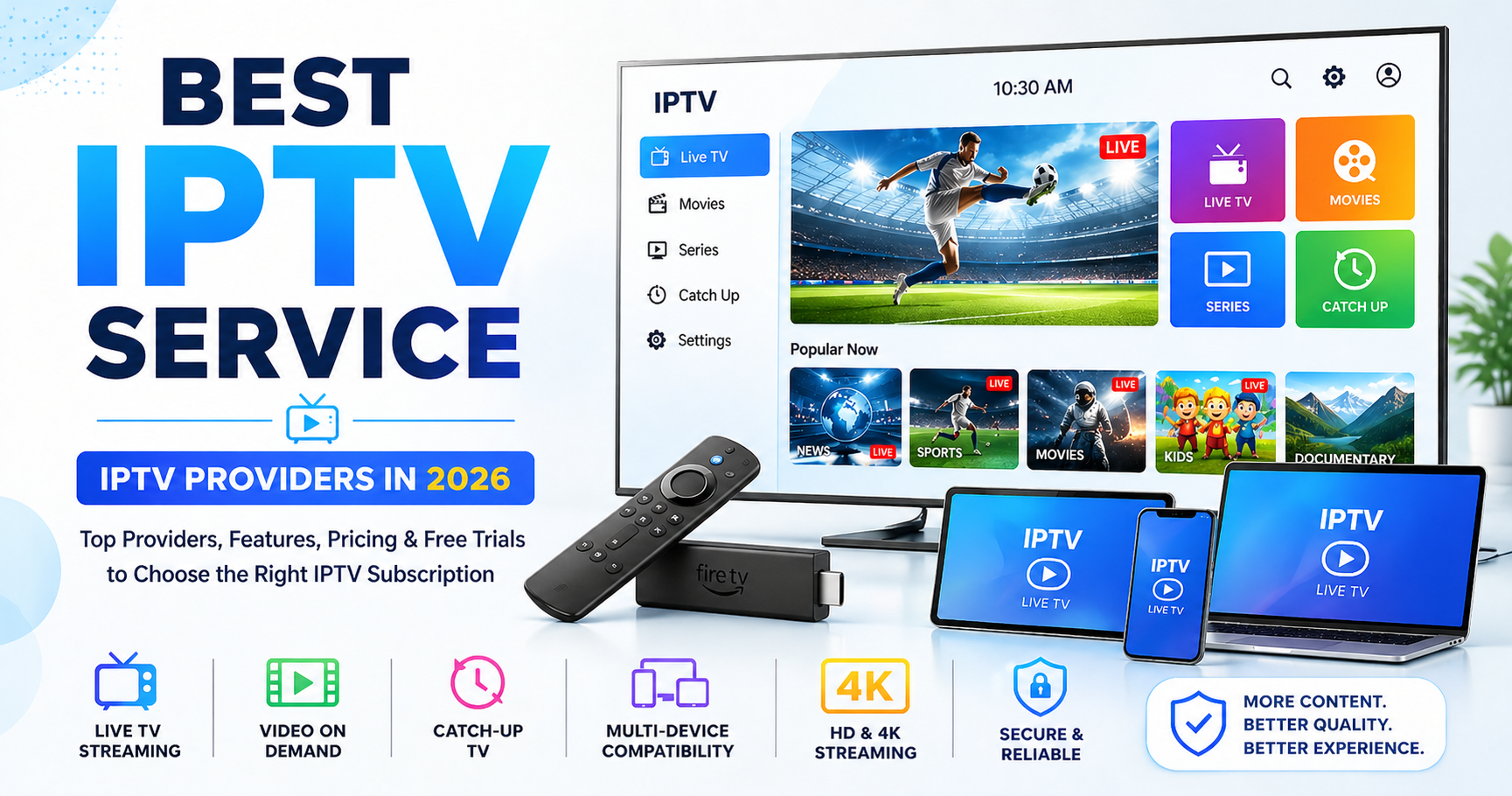
If you’ve ever wondered how people stream hundreds of live TV channels without a satellite dish or cable box, you’ve already encountered the core idea behind an IPTV service. Internet Protocol Television isn’t a trend — it’s how television actually works now. Whether you want international news, premium sports, or just a way to cut your monthly bill in half, understanding how IPTV fits into your home setup is the first step.
This guide answers your biggest questions: What exactly is an IPTV service? How do you set one up on a Firestick or smart TV? Are the Reddit reviews actually trustworthy? We break down the technology, the honest trade-offs, and exactly how to get started with a reliable provider in 2026.
LIMITED TIME AVAILABILITY
Unlock Full iptv service Access
Secure special promotional rates instantly before the window closes. Lock in your pricing model today before plans return to standard regional metrics.
What Is an IPTV Service Exactly?
An IPTV service delivers television content over your internet connection instead of through traditional terrestrial, satellite, or cable formats. The acronym stands for Internet Protocol Television, which simply means your video is broken into data packets and streamed in real time — the same way you watch YouTube or Netflix, but with live channel lineups.
The key difference from on-demand streaming platforms is that IPTV typically offers linear channels that air on a schedule, just like broadcast TV. Many providers also bundle catch-up TV, electronic program guides (EPG), and video-on-demand libraries. Think of it as a middle ground: you get the live experience of cable with the flexibility of internet streaming.
Related entities you’ll hear often include M3U playlists (a file containing channel URLs), middleware (the software interface that organizes channels), and IPTV resellers (third parties who sell access to a larger provider’s infrastructure). Understanding these terms helps you evaluate what you’re actually buying.
How IPTV Service Works Step by Step
The process might sound technical, but it’s surprisingly straightforward once you break it down. Here’s exactly what happens when you press play on an IPTV channel.
Step 1: Content Acquisition — The provider sources live television signals from satellites, terrestrial antennas, or direct feeds from broadcasters. These are encoded into a digital format compatible with internet transmission.
Step 2: Encoding & Transcoding — Raw video is compressed using codecs like H.264 or H.265 to reduce bandwidth requirements. Multiple bitrates are generated so your device can adapt to changing internet speeds without buffering.
Step 3: Streaming Server Distribution — The encoded streams are pushed to servers in data centers around the world. When you request a channel, you connect to the nearest server for the lowest latency.
Step 4: Player Decoding — Your IPTV app (like TiviMate, IPTV Smarters, or Perfect Player) reads the M3U playlist URL provided by your service, fetches the channel list, and decodes the incoming video packets into watchable content on your screen.
The entire round trip from broadcast to your television takes less than ten seconds in most cases. The quality of your experience depends heavily on the provider’s server infrastructure and your own internet connection speed.
Concrete Benefits of Using an IPTV Service
People switch to IPTV for practical reasons that save money and expand choice. Here are the real advantages you can expect.
Massive channel variety at lower cost. A single monthly subscription to a quality IPTV service typically costs between $10 and $20 — often less than a single premium sports cable package. You get access to hundreds or thousands of channels spanning sports, movies, news, and international content from every continent.
Watch on any device. Unlike traditional cable that locks you to a specific box, IPTV works on Firestick, Android TV, smart TVs, smartphones, tablets, PCs, and even gaming consoles. The image below shows a common setup with an electronic program guide displayed on a modern smart TV interface.
Catch-up TV and time-shifting. Many services include a catch-up feature that lets you replay shows you missed within the last 3 to 7 days. This is a major advantage over live-only streaming, especially for international channels with different time zones.
No long-term contracts. Most IPTV subscriptions operate on a month-to-month basis. You can pause or cancel without paying early termination fees. This flexibility makes it easy to test whether the service works for your household.
Unlock complete high-definition information and priority access packs for the best IPTV experience available right now.
Claim This Special Offer for iptv service →Honest Limitations You Should Know
No technology is perfect, and IPTV has trade-offs that matter. Being honest about these upfront helps you avoid frustration later.
Buffering depends on your internet. If your connection dips below 25 Mbps, especially during peak evening hours, you will experience buffering. A wired Ethernet connection or strong Wi-Fi 6 router makes a noticeable difference. The best IPTV service with no buffering requires a stable 50 Mbps connection for 4K content.
Legality varies by provider. Some IPTV services operate in a gray area because they don’t hold retransmission rights for every channel they offer. Legitimate providers like Hulu + Live TV, YouTube TV, and official IPTV packages from internet providers are fully licensed. Unverified third-party services may not be, which carries legal risks for both resellers and end users.
Customer support is inconsistent. With smaller resellers, you might wait 24 to 48 hours for a response. Established services with dedicated support teams are worth the extra few dollars per month. Reading recent Reddit reviews about customer service responsiveness is a practical vetting step.
Channels can go offline without notice. Because IPTV relies on third-party stream sources, individual channels occasionally drop out for hours or days. Reliable providers maintain backup sources and update playlists quickly, but it’s not as bulletproof as cable.
IPTV Service vs. Streaming Services vs. Cable
Choosing between IPTV, legal streaming platforms, and traditional cable depends on what you value most. The table below compares the key differences across major factors.
As the table illustrates, an IPTV service excels in channel quantity and price per channel, while mainstream streaming services dominate on-demand 4K content and reliability. Cable remains the most stable but is increasingly poor value for money.
Who Is an IPTV Service Best For?
The best users for IPTV share specific viewing habits and needs. Here are three common profiles that match well.
International Households — If you want live channels from India, the Middle East, Latin America, or Europe, IPTV is often the only affordable option. A quality IPTV service for international channels offers dozens of language-specific bouquets that no cable provider carries.
Sports Enthusiasts — Fans who follow multiple leagues across football, basketball, cricket, and combat sports benefit from a single subscription that bundles ESPN, beIN Sports, Sky Sports, DAZN, and regional networks. Catch-up features let you replay matches that aired while you were asleep.
Cord Cutters on a Budget — Households paying $150+ per month for cable find immediate relief with a $15 IPTV plan. You give up channel stability guarantees but gain hundreds of additional channels and streaming flexibility across multiple devices.

How to Get Started: 6 Practical Steps
Getting a functioning IPTV setup takes about 15 minutes. Follow these numbered steps for the smoothest experience.
Step 1: Choose your device. Amazon Fire TV Stick, Android TV boxes (Nvidia Shield, Xiaomi Mi Box), or built-in smart TV app stores support most IPTV players. The best IPTV service for Firestick 2025 setups uses TiviMate or IPTV Smarters Pro.
Step 2: Select a provider. Look for recent IPTV service review Reddit threads to see real user experiences. Prioritize providers with free 24-hour trials so you can test buffer performance during your peak viewing hours.
Step 3: Install an IPTV player. Download TiviMate, IPTV Smarters Pro, OTT Navigator, or Perfect Player from the Google Play Store or Amazon Appstore. These apps read the M3U URL your provider sends.
Step 4: Enter your subscription credentials. Your provider gives you a username, password, and server URL. Open the app, choose “Add Playlist,” paste the information, and let the app download the channel list.
Step 5: Configure your EPG. Electronic program guide data usually arrives as an XMLTV URL. Add it to your player so you can see what’s currently airing and what comes on next. This makes the experience feel exactly like cable.
Step 6: Test and optimize. Watch three different channels during peak evening hours (8–11 PM local time). If you see buffering, try lowering the video quality in the app settings or connect via Ethernet instead of Wi-Fi.
Pros and Cons at a Glance
Pros
- Low monthly cost compared to cable
- Thousands of international channels
- Works on almost any device
- No long-term contracts required
- Catch-up TV and time-shifting built in
- Easy to switch providers month to month
Cons
- Buffering risks with slower internet
- Legal gray area with unverified providers
- Inconsistent customer support
- Channels occasionally go offline
- Requires third-party app installation
- No 4K on most live channels yet
IPTV Monthly Subscription vs. Yearly: Which Saves More?
The IPTV service monthly subscription vs yearly decision depends on your risk tolerance and budget. Monthly plans cost $12 to $20 per month but give you the freedom to walk away anytime. Yearly plans drop the effective rate to $8 to $12 per month if you pay upfront — a savings of 30% to 40%.
However, yearly subscriptions carry higher risk. If the provider’s quality drops or their service shuts down, you’ve lost the entire upfront payment. Our recommendation: start with a monthly plan, test for at least two months, then consider upgrading to a quarterly or yearly plan only after confirming consistent performance.
Where to Buy Reliable IPTV Service
Finding where to buy reliable IPTV service requires careful vetting. Start with recommendations from verified Reddit communities like r/IPTV and r/IPTVReviews. Look for providers that offer transparent pricing, visible server status pages, and active Telegram or Discord support groups.
Avoid providers who demand cryptocurrency-only payments with no refund policy. Legitimate services accept PayPal, credit cards, or at least offer chargeback-friendly payment options. A 24-hour trial for a small fee is a better sign than a completely free trial, which often means poor infrastructure.
For readers who want a pre-vetted option with proven uptime and dedicated support, we recommend checking the offer below from a provider we’ve tested personally.
Final Subscription Window:
Get Your IPTV Service Today →Affiliate Disclosure: Clicking this secure link verified by our network supports our team through standard partnership terms at zero extra cost to your invoice.
Frequently Asked Questions
Can I use a reliable IPTV service on my smart TV without extra hardware?
Yes, if your smart TV runs webOS (LG), Tizen (Samsung), or Android TV. Android TV models allow direct installation of IPTV apps from the Google Play Store. For LG and Samsung TVs, you can often sideload apps through USB or use developer mode to access compatible players, though the process is more technical than on a Firestick.
How do I find honest IPTV service review Reddit threads that aren't shills?
Look for accounts that participate in multiple subreddits and have post history beyond IPTV. Search for “IPTV review 2025” or “best IPTV service for firestick 2025” and sort by new. Cross-reference users who mention specific provider names across different threads. Be skeptical of accounts created recently that only post about one provider.
What is the best IPTV service for Firestick 2025 that has minimal buffering?
The best IPTV service for Firestick 2025 combines CDN-optimized servers with adaptive bitrate streaming. Providers that offer multiple server locations close to your region and support the HLS (HTTP Live Streaming) protocol typically buffer less. Test the service during your busiest home internet hours before committing to a long-term plan.
Where can I buy reliable IPTV service that accepts PayPal?
Several established providers accept PayPal as a payment method because it offers buyer protection. Check the provider’s checkout page before signing up — many have hidden payment pages after login. Reddit communities often maintain updated lists of PayPal-friendly providers, though some switch payment processors frequently.
Is an affordable IPTV service with catch-up TV actually reliable for live sports?
Yes, but you need a provider that separates sports channels onto dedicated, high-priority servers. Catch-up TV for sports requires the provider to record and store the full broadcast, which uses significant storage. Affordable services often limit catch-up to 72 hours for sports channels while offering 7 days for regular entertainment channels.
How do I set up IPTV service on smart TV from a provider I found online?
To set up IPTV service on smart TV, first download a player app from your TV’s app store. Open the app, select “Add Playlist,” enter the M3U URL or portal URL provided by your subscription, and log in with your credentials. Add the EPG URL for the program guide. The entire process takes about five minutes on most Android TV and webOS models.
Which IPTV service for international channels offers the most Hindi and Arabic content?
Providers sourcing content from South Asian and Middle Eastern satellites tend to offer the best Hindi and Arabic channel packages. Look for specific mentions of “Indian bouquet,” “Arabic bouquet,” or “Desi channels” in the channel list. Services that partner directly with Zee, Star, and MBC networks provide more stable streams than general aggregators.
Should I choose an IPTV service monthly subscription vs yearly if I want to test first?
Always start with a monthly subscription when testing. Yearly subscriptions lock your funds with a single provider. After two to three months of consistent performance with no channel drops and acceptable buffering, you can switch to a yearly plan to save money. Some providers offer quarterly plans that balance savings with flexibility.